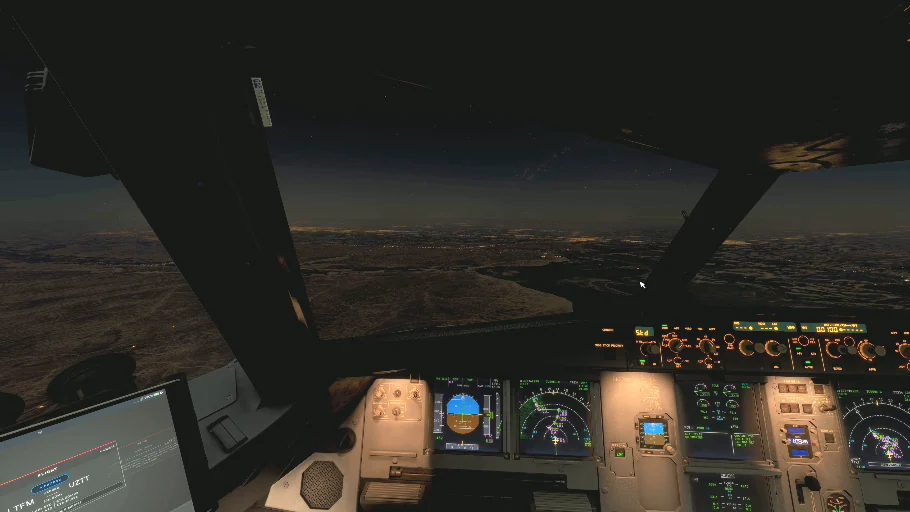
Dated dispatch, Tashkent navigation-data, regional-airspace and Samarkand compatibility guidance, with direct access to current company notices.
UZB-OPS-001/26 — Dispatch and PIREP guidance
Displayed expiry: 2026-11-05 · source reviewed 31 October 2026
Applies to all company flights. Before departure, use the Operations Guide for booking, flight preparation, Pegasus tracking and PIREP submission.
Book in Phoenix before opening Pegasus, confirm the loaded flight and aircraft, and prepare a fresh plan for the sector. Keep Pegasus running through successful PIREP submission, then check the report in Phoenix.
For VATSIM flights, use Send to VATSIM from the VA booking and retain the matching CS marker, full VA name and supplied WEB link. This identification requirement was published on 27 October 2026. The Operations Guide explains its scope, the evidence to retain and staff review.
Explain significant deviations or recording problems in the PIREP. Follow the published requirements for the booked service, tour or activity.
The procedures remain in the guide after this reminder expires on 5 November 2026. Company simulation notice. Reviewed 31 October 2026.
Displayed expiry: 2026-11-05 · source reviewed 31 October 2026
Applies to flights to or from Tashkent (UZTT) when scenery or an add-on still uses the former identifier UTTT.
The VA owner reports that the local MSFS 2024 and FSHud setup now works after scenery and traffic-plan alignment. Compatibility on other installations depends on their scenery and databases.
Keep UZTT in your Phoenix booking. Check that Pegasus has loaded the correct booked sector.
In your planning tool, aircraft and ATC software, check the physical airport, runway and required departure, arrival and approach procedures. Changing an identifier alone does not validate those data.
If a required procedure or airport function is missing, follow the configuration guidance below and contact Pilot Support with your software, scenery and AIRAC details. When online, tell ATC about relevant limitations before accepting a procedure you cannot fly.
If your setup already works, continue using it. Any identifier mapping or local file change must be specific to the affected application and scenery.
Company simulation notice. Reviewed 31 October 2026.
Displayed expiry: 2026-11-16 · source reviewed 31 October 2026
Reviewed 31 October 2026. Applies to company flights whose route, destination or alternate involves the areas below.
These are selected real-world EASA advisories, with the operator applicability stated in each source. They provide context for simulation planning. This notice does not introduce a VA route ban or change PIREP acceptance rules.
• Russia — CZIB 2025-01 R3 recommends avoiding Russian airspace west of 60°E at all levels. Valid to 31 January 2027, unless revised earlier.
• Iran — CZIB-2026-04-R2 recommends avoiding Tehran FIR (OIIX) at all levels. Valid to 16 November 2026, unless revised earlier.
• Afghanistan — CZIB-2017-08R19 recommends avoiding Kabul FIR (OAKX) below FL320. Valid to 31 January 2027, unless revised earlier.
• Pakistan — CZIB-2018-02R21 recommends avoiding airspace below FL260 over Baluchistan and Khyber Pakhtunkhwa within Karachi and Lahore FIRs. Valid to 31 January 2027, unless revised earlier.
• Persian Gulf and Gulf of Oman — CZIB-2026-07R3 recommends avoiding Persian Gulf waters within Bahrain, Kuwait, Doha and Emirates FIRs, with a limited exception for necessary arrivals and departures. It also recommends avoiding Gulf of Oman waters within Muscat FIR west of 58°E at all levels. Read the source for land-area caution, risk assessment and contingency provisions. Valid to 16 November 2026, unless revised earlier.
Before dispatch, compare the planned FIRs and levels, including climb, descent and alternate routing, with the relevant current publications. Review any reroute for fuel, aircraft capability and alternate suitability. For online flights, check the network’s current procedures and tell ATC about simulator limitations. A booking or generated OFP does not confirm current real-world route availability.
Read the complete sources below for applicability and exceptions. Consult the full EASA index for other areas along your route. Bulletin expiry does not establish that an airspace restriction or risk has ended.
EASA Russia — revision 24 July 2026
EASA Iran — revision 30 September 2026
EASA Afghanistan — revision 24 July 2026
EASA Pakistan — revision 24 July 2026
EASA Persian Gulf and Gulf of Oman — revision 30 September 2026
Samarkand UZSS: scenery, stands and taxi guidance.
A local report reviewed on 31 October 2026 describes missing or mismatched stands and taxi guidance with Middle Asia Developers scenery, GSX and FSHud. The cause and a general fix remain unverified. Keep UZSS in the VA booking; legacy UTSS may appear in add-ons. Compare airport recognition, runway, taxiways and a suitable stand before flight. Do not rely on an unconfirmed gate assignment. Follow online ATC and report versions and screenshots to Operations.
The dashboard asks for review by 3 November 2026. This is a simulator compatibility notice, not an AIS restriction.